
EMERALDS
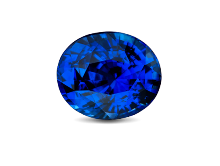
SAPPHIRES
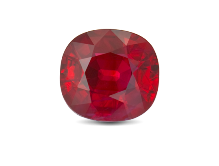
RUBIES
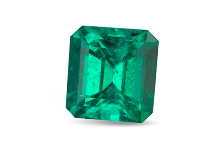
EMERALDS
EMERALDS
Emerald is a variety of Beryl known for its vibrant shades of green to bluish-green.
REGIONS WHERE EMERALDS ARE FOUND
Colombia, Zambia, Brazil, Pakistan, Afghanistan, Russia, Madagascar and Zimbabwe.
Emerald has been sought after and prized by cultures across the world, with some examples of important stones surpassing the price of diamonds at auction.
While many emeralds exhibit a garden of inclusions within the stone, fine examples can be completely clean and yield prices far higher than included stones.
One factor to consider with Emeralds is its wearability and hardness. While the Emerald is a softer stone than Ruby and Sapphire it is still a suitable stone for everyday wear making it versatile enough to be set into many different types of jewelry.
Noteworthy sources of emeralds include Colombia, which is renowned for producing
some of the world’s highest-quality emeralds, particularly from the Muzo, Coscuez, and
Chivor mines. Other significant sources are Zambia, known for its deep green, high-
quality stones, and Brazil, where emeralds are found in various shades of green.
Afghanistan and Zimbabwe also contribute to the global emerald supply, offering
unique characteristics and colors. Each of these regions has its distinct geological
conditions that contribute to the quality and appearance of the gemstones.
SAPPHIRES
SAPPHIRES
Sapphire is a variety of corundum, known for a large range of colors from blue tones to greens, yellows, pinks, and purple tones.
REGIONS WHERE SAPPHIRES ARE FOUND
Sri Lanka, Myanmar (Burma), Thailand, Madagascar, Australia, and the United States (Montana).
The colors of each sapphire determined by their unique combinations of trace elements.
One of the most famous Sapphires in modern times is the engagement ring presented to
Princess Diana by Prince Charles; a special order piece designed by the first official crown
jeweler Garrard. Sapphires are very durable stones, alongside Ruby they are second hardest
only to Diamonds making them versatile stones suitable for everyday wear.
Prominent sources of sapphires include Sri Lanka, renowned for its high-quality blue sapphires,
and Myanmar, which produces deep, rich blue stones. Thailand, with its vibrant range of
colors, and Madagascar, known for both blue and color-changing sapphires, are also
significant suppliers. Australia, particularly Queensland, offers a variety of dark blue and
greenish-blue sapphires. Kashmir, though no longer an active source, remains famous for its
rare, velvety blue sapphires. Additionally, countries like Kenya, Tanzania, and Mozambique in
Africa contribute sapphires in diverse colors, further enriching the global market.
RUBIES
RUBIES
Ruby attains their distinct red tones from chromium which is the same as sapphire.
REGIONS WHERE RUBIES ARE FOUND
Afghanistan, Australia, Cambodia, India, Madagascar, Malawi, Mozambique, Pakistan, Sri Lanka, Tanzania, Thailand, the United States, and Vietnam.
A fine example of Ruby’s ideal color is known as “Pigeon Blood” which is known for its deep red tone and saturation of color. Perhaps the most famous Ruby, known as the “Sunrise Ruby” sold for a record-breaking $30 million at auction with a price per carat of USD 1.2 million. Rubies are very durable stones, alongside Sapphire they are second hardest only to Diamonds making them versatile stones suitable for everyday wear.
Notable regions where rubies are sourced include Myanmar (Burma), known for producing
some of the world’s finest and most valuable rubies, especially from the Mogok Valley. Thailand
is another significant source, where rubies are often found in large quantities, though with a
lower level of quality compared to Myanmar’s. Sri Lanka is also renowned for its high-quality
rubies, often with a unique deep red hue. Other regions include Mozambique, which has
gained attention in recent years for its high-quality rubies, and Madagascar, which is emerging
as a notable supplier of rubies with exceptional color and clarity.
Treatment, disclosed plainly
Almost all sapphire and ruby on the world market is heat treated, and almost all emerald is oiled or resin filled. This is normal, accepted throughout the trade, and not a defect. What matters is that it is disclosed, because your customer has a right to know and because some markets require it in writing.
We tell you what has been done to every stone we supply. If you need untreated stones, they exist and they cost materially more, so decide that before designing rather than after quoting. If you are happy with treated stones, say so and we will buy in the range that gives you the best colour for the money.
Working with the big three
Emerald is the softest of the three and includes inclusions as a matter of course. It should be bezel set or otherwise protected wherever possible, and it should never go into a piece a customer will wear while washing up. Sapphire and ruby are both corundum and hard enough for daily wear in almost any setting, which is why they carry engagement and eternity ranges so well.
If a design calls for emerald in a ring that will be worn every day, we will say so. It is a better conversation at sampling than a warranty claim later.
Colour, origin and price
Colour drives price far more than carat weight in coloured stones. A one-carat sapphire in a strong even blue can cost several times a one-carat stone in a pale or over-dark blue. Origin adds another premium on top: certain origins carry names the trade pays for, and whether that premium is worth passing to your customers depends entirely on who they are.
For most wholesale ranges the sensible buy is a strong colour without a premium origin. We will show you both at sampling so you can see what the difference actually looks like in the finished piece rather than on paper.
Matching across a run
Matching coloured stones is harder than matching diamonds, because you are matching hue, tone and saturation at once rather than a single grade. For any run above a few dozen pieces, expect us to buy a parcel and select from it, and expect a small allowance for stones that do not make the cut. That allowance is in the quote, not a surprise later.